uni's digital archive
Size Doesn't Matter
Questyle M15i
from 05/26/2026, by uni — 13m read
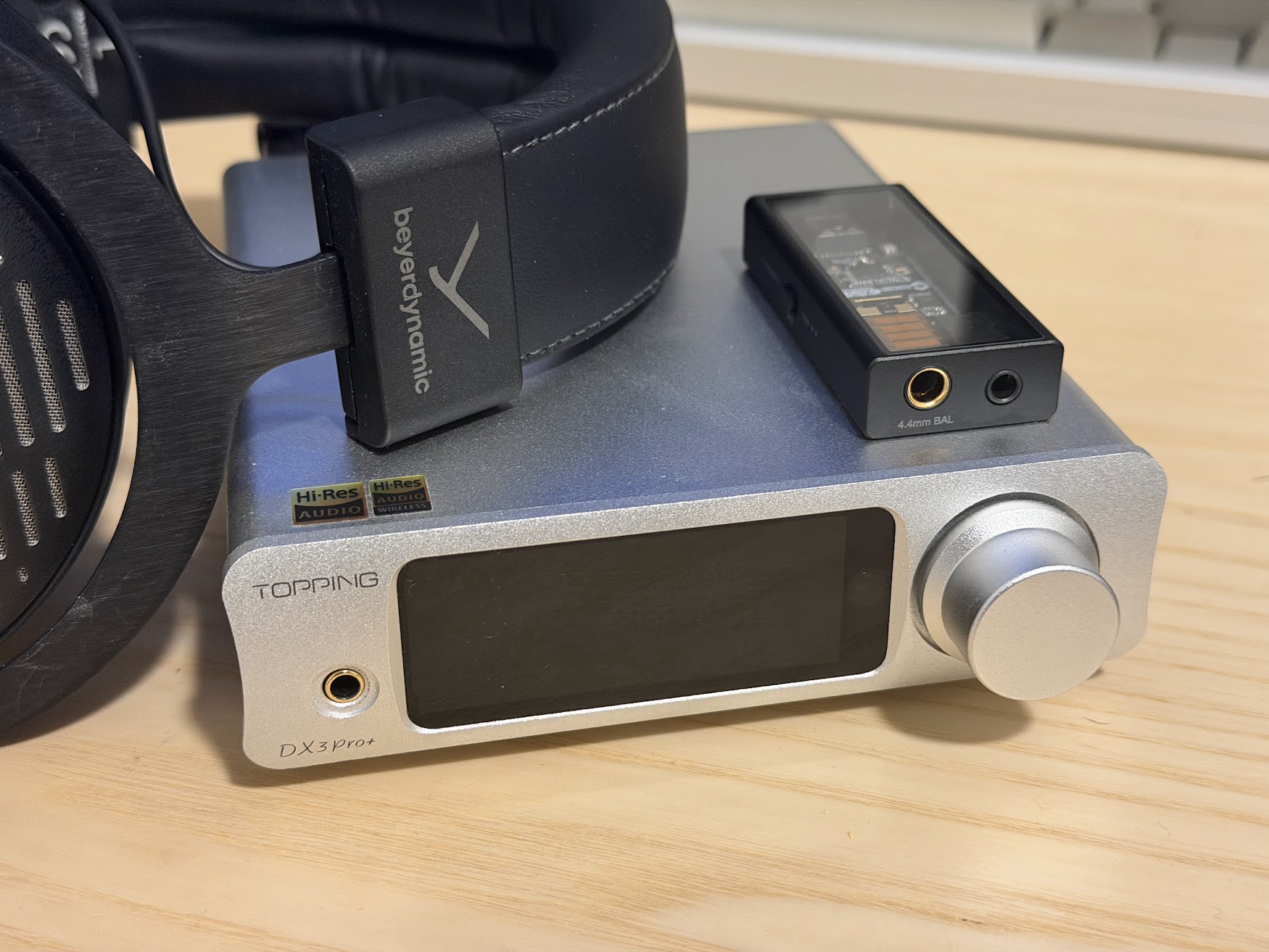 Figure 1: Dead Topping replaced by the Questyle M15i
Three years ago, back when I lived in my previous apartment, I bought a new headphone amplifier: the Topping DX3 Pro+. At the time, I had been running my headphones directly from my motherboard's audio output, mostly because my previous setup, a Schiit Vali 2 and Modi 2 stack, had died. More specifically, I somehow killed the tube in the Vali, which left the Modi 2 functionally useless as well. What surprised me then, and what still bothers me now, is that the downgrade was not nearly as dramatic as I expected. The noise floor was a little worse, and the sound lost some of the warmth I associated with the Schiit stack, but my DT 1990 Pros still ran perfectly well from the motherboard. It was not ideal, exactly, but it was also not the catastrophic loss in quality that audiophile discourse often trains you to expect. In retrospect, that moment should have clarified something for me: my actual audio needs were fairly modest, and the distance between "functional," "good," and "audiophile-approved" was much smaller in practice than it appeared in theory.
Jump forward to the present, or more specifically, two weeks ago: my Topping amplifier died too. At first, I assumed it was just another connection issue. In the past, the amp would occasionally lose its USB connection to my PC, and a quick restart, or unplugging and replugging the power cable, usually fixed it. This time however, nothing worked. My heart sank when I realized it was not coming back, so I returned once again to my motherboard audio. And once again, I have to admit the difference was minuscule. If someone had secretly switched my audio devices without telling me, I honestly doubt I would have noticed. That is the uncomfortable truth at the center of this whole situation: I knew, consciously, that the practical difference was smaller than my desire for another product. I knew that whatever improvement existed was probably at the edge of perception, if not beyond it entirely. This awareness did little to weaken my desire; instead, it made the contradiction harder to ignore.
That contradiction bothers me because it exposes a familiar but unpleasant form of consumer logic. I did not strictly need a new DAC/amp, at least not in any urgent or materially meaningful sense. I had a working solution, and the deficiencies of that solution were marginal. Nevertheless, I felt the pull of replacement almost immediately. Was it because I wanted my desk setup to feel complete again? Was there some quiet sense that using motherboard audio made the whole arrangement feel improper, as though I had regressed from a more refined version of myself? Was it simply the dopamine spike of clicking "Purchase", waiting for the package, and unboxing a new object that seemed momentarily full of possibility? These explanations are all plausible, but none of them are entirely satisfying on their own. The desire was not merely chemical, nor was it entirely irrational. It was attached to taste, identity, research, technical curiosity, and the pleasure of imagining a better version of an already functional system.
So, somewhat irresponsibly, I bought the Questyle M15i: the updated version of the acclaimed M15, a portable DAC/amp that costs around $200. And yes, despite being genuinely portable, I am using it strictly at my desk. I could use it with my phone, but at this point I would rather just use my AirPods when I am out. Convenience wins. I first came across the M15i while researching the Chord Mojo 2, a device that has been sitting on my wishlist for an embarrassingly long time. The Mojo 2 always fascinated me because it feels less like a generic DAC/amp and more like a strange artifact from a parallel universe of audio engineering. It uses a custom FPGA rather than a standard DAC chip, has an unusual design language, and feels like a product shaped by a very specific engineering philosophy. But I could never justify spending $600 on it, especially when I already had a working audio setup. The lack of USB-C on the original model did not help its case either.
Eventually, I let the idea of the Mojo 2 go, at least officially. Audio products are often as much about narrative as they are about sound, and the Mojo 2 has an especially compelling narrative: custom chip, aircraft-grade construction, British hi-fi mystique, and a design philosophy that presents itself as meaningfully distinct from the more anonymous world of off-the-shelf DAC chips. The whole thing practically begs to be fetishized. The M15i, by contrast, is much more modest. It uses an ESS DAC, is far smaller, and feels more like a precise tool than a luxury object. That distinction matters because it gave me a justification I was more comfortable accepting. I was not buying the grand mythological object. I was buying the restrained, functional, efficient one. It was not indulgence, or at least not the worst form of indulgence. It was the practical compromise. This is, of course, how consumer desire often preserves its dignity: by presenting itself as discipline.
The M15i's design leans toward function rather than flair, and I have always had a soft spot for objects that appear to be organized around a clear engineering constraint. There is only one physical control on the device itself: a switch for standard or high gain. There are no volume buttons, no knob, and no glowing screen trying to make the device seem more important than it is. Compared to my old Topping, that is technically a loss, but not one I care about much. I never liked the feel of the Topping's volume knob anyway, and I mostly controlled volume through Windows. The M15i does have one indulgent flourish: a glass panel that reveals the PCB and chips inside. It is a small gesture, but an effective one. It lets the object show its work, and in doing so it invites a particular kind of appreciation.
My first reaction when listening to it was not excitement, but dread. I thought it was broken. With Windows volume set to 50 and the M15i on standard gain, the opening silence of my test track was so complete that it felt wrong. There was no hiss, no faint electrical texture, absolutely no indication that anything was happening at all. Then, two seconds later, the instrumental appeared out of nowhere. I paused the music immediately. After a moment, I realized the device was not broken. It was simply doing its job extremely well. I also learned very quickly that 50% volume was far too loud. Even so, what shocked me was the absence of any obvious noise floor. With the Topping, which is itself a well-measured and well-regarded device, I could still detect some noise when pushing the amp toward its limits. With the M15i, even at roughly twice my normal listening volume, there was nothing I could hear. For something the size of a matchbox, that is genuinely impressive.
I will try to explain the internals without turning this into a spec sheet. Questyle's main claim is its patented Current Mode Amplification technology, or CMA. In broad terms, the idea is that the amplifier processes the signal in current mode rather than through a more conventional voltage-mode design, which Questyle argues allows for very low distortion, low output impedance, and extremely fast response. That sounds impressive, but the obvious question is whether any of this actually matters to a human listener. I have no measurement rig, no controlled listening setup, and no way to verify Questyle's claims myself. I also do not want to pretend that my subjective impressions are scientific evidence. Audio is already full of people laundering preference into pseudo-objective truth, and I do not want to add to that pile. What I can say is more modest: the device is powerful enough for my use, silent enough that I cannot detect a meaningful noise floor, and small enough that it feels almost absurd. Whether CMA itself is responsible for that experience is harder to say. Maybe the architecture matters. Maybe the implementation matters more. Maybe the audible difference between this and any other competent modern DAC/amp is effectively nonexistent. The most honest answer is probably the least romantic one: the M15i is a well-engineered device operating comfortably within the limits of what I can actually hear.
Still, there is something compelling about that. Not because it transforms my music library, because it does not. Not because it reveals some hidden layer of sound I had never noticed before, because that would be dishonest. What impresses me is the density of the thing. It is a tiny glass-and-metal rectangle powered entirely through USB-C, with no separate power brick, no desktop footprint, no extra wall cable, and no real ceremony. It does one job, does it cleanly, and then gets out of the way. That is the part of technology I still find beautiful: not maximalism, not feature bloat, not the endless escalation of specifications for their own sake, but compression. The elegance of making something smaller, cleaner, quieter, and more efficient without making it feel compromised. The M15i appeals to the same part of me that likes compact computers, small form-factor builds, dense timepieces, and objects where every millimeter seems accounted for.
But this is also where the guilt returns, because I do not think I bought the M15i only because I needed an audio solution. I bought it because I admired it. I liked the category. I liked the research. I liked comparing devices, reading impressions, learning the mythology around different audio products, and imagining how this small object would fit into my desk setup. By the time I clicked purchase, I had already "half-owned" it mentally. The transaction merely made the fantasy physical. That is quintessential consumerism, and I do not think there is any useful way to soften it. I had a problem, but not a serious one. I had a solution, but not a necessary one. What I really had was a desire that had learned how to disguise itself as practical reasoning.
This experience is not unique to audio. It happens with keyboards, headphones, computer parts, phones, cameras, notebooks, clothes, bags, furniture, and probably anything else that can be turned into a "setup." The object becomes more than an object. It becomes a way to complete an image of oneself. You are not just buying a DAC/amp. You are buying the feeling of being the kind of person who has a refined, intentional, technically coherent desk. You are buying proof of taste. That is what bothers me most. I do not think the dopamine hit is fake, but I also think it is too shallow an explanation. The pleasure is not only in buying. The pleasure is in the whole ritual before buying: the research, comparison, anticipation, justification, and eventual surrender. The purchase feels like resolution. It ends the argument inside your head. For a brief moment, desire becomes quiet because it has been satisfied.
What makes the cycle of consumerism difficult to escape is the short lifespan of satisfaction itself. The acquisition temporarily stabilizes desire, yet that stability disappears almost as soon as the object becomes your new normal. The product arrives, the box is opened, the object joins the desk, and the mind immediately begins adapting to its presence. What once felt like an exciting acquisition slowly becomes part of the background. Then the cycle becomes available again, waiting to attach itself to some new gap, some new category, some new object that promises a slightly better version of the life you already have. So yes, I am satisfied with the M15i. It is small, elegant, technically impressive, and useful enough that I know I will keep it on my desk and use it every day. But satisfaction does not fully absolve the purchase. There is still a faint guilt attached to it, because I know the device solved a problem that barely existed.
I appreciate audio technology. I appreciate small, well-engineered objects. The M15i sits almost perfectly at the intersection of those interests. But I also want to believe that appreciation does not have to end in ownership. I want to be the kind of person who can admire a beautifully designed thing, understand why it is good, and still leave it alone. Consumerism makes that harder than it should be. It teaches us that taste should be completed through acquisition, that admiration without purchase is somehow incomplete. Maybe that is what bothers me most. The M15i is useful, and I will use it every day, but its usefulness does not erase the fact that I bought it to resolve a desire that ownership itself had helped create.